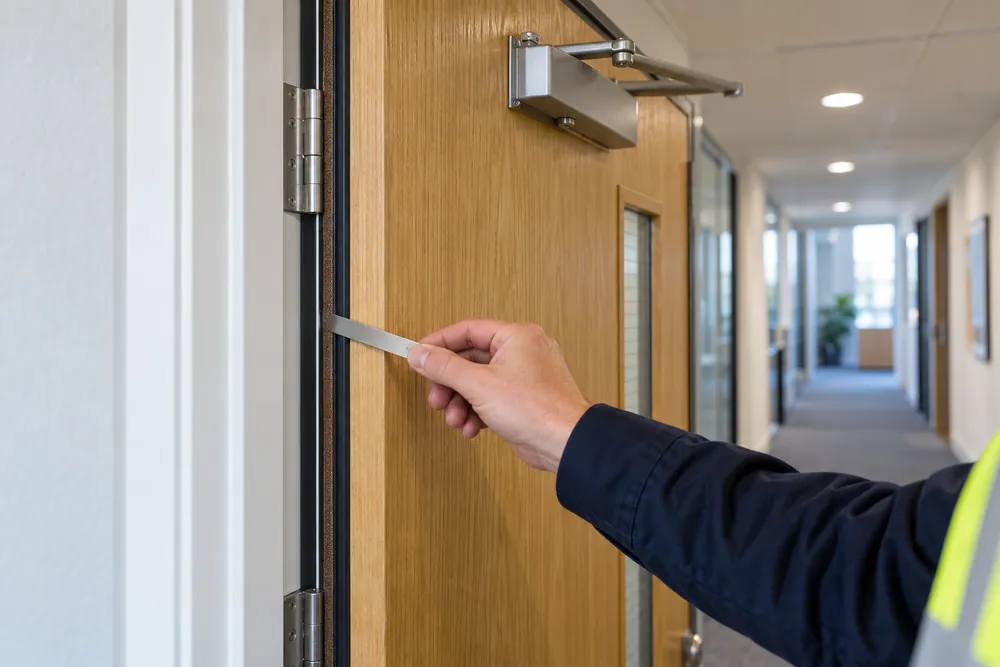
Why The Whole Assembly Matters
A fire door works as part of an assembly, including its frame, glazing, seals, hinges, closer and other hardware. Damage or an unsuitable alteration to one component can affect the intended performance. The surrounding wall and the connection between the frame and structure also matter to the overall fire separation.
An inspection should identify the door's location and intended role before commenting on its condition. A door on a protected stair may have a different purpose from a door serving a store. We ask about your building use and fire risk assessment so the proposed inspection addresses the doors that matter to your premises.
When To Request An Inspection
Inspection is useful when taking over a commercial building, following refurbishment or when an assessment identifies possible door defects. Doors in busy circulation routes can develop closing and alignment problems through ordinary use. Damaged glazing, missing seals, wedged doors and altered ironmongery all warrant attention.
A risk-based inspection programme should reflect use, condition and the building's fire strategy. Avoid applying a single inspection interval to every commercial door without considering those factors. The responsible person should also make arrangements for reporting obvious damage between formal visits, especially where trolleys or frequent deliveries affect the door assembly.
Standards And Commercial Responsibilities
BS 8214:2016 provides recommendations for specification, installation and maintenance of timber-based fire door assemblies. It is relevant to the timber doors within its scope, rather than every possible door product. Manufacturer documentation and evidence for the particular assembly help determine whether components and details are appropriate.
The Regulatory Reform (Fire Safety) Order 2005 includes duties to maintain fire precautions in premises within its scope. Building regulations and the building's documented fire strategy can also affect the required door performance. An inspection should explain the basis of its findings and avoid presenting a visual visit as a new product fire test.
What Is Examined On Site
The inspector should look for damage, distortion, poor fitting and evidence of unauthorised changes. Checks may include the leaf and frame, perimeter gaps, seals, hinges, glazing and the operation of closing and latching devices. Door identification should link the findings to a plan or clear room reference.
Hold-open devices and access-control arrangements need to be understood alongside the alarm and evacuation strategy. A door that closes manually may still have a problem with its release interface. Agree whether interface testing is included or whether the fire alarm contractor needs to attend separately.
Understand What A Visual Inspection Can Show
A non-intrusive inspection can identify visible defects and record available labels or evidence. It cannot establish concealed fixings, hidden frame packing or the fire performance of an unidentified assembly with certainty. Any inaccessible area or missing evidence should be recorded rather than silently treated as satisfactory.
Where uncertainty is material, the next step may be a document review, targeted opening-up or specialist advice. The recommendation should identify the question to be resolved and who can resolve it. Replacement should follow an informed specification, rather than assuming a new leaf alone will correct every problem.
A Defect Schedule You Can Use
Ask for door-by-door records with photographs, location references and descriptions of the defects. A useful schedule distinguishes adjustment or repair from a need for further investigation. Priority should reflect the significance of the defect in its location, rather than simply sorting doors by the order inspected.
Remedial work should use compatible components and follow the applicable assembly evidence and manufacturer instructions. Keep the repair record connected to the original door reference. Reinspection can then confirm the particular work is complete without losing the history or overlooking a remaining defect on the same assembly.
What Affects Inspection Cost
The door count, building layout, available evidence and reporting detail all influence the inspection scope. Access arrangements, occupied rooms, security restrictions and the need to coordinate with other contractors can add time. Intrusive investigations and remedial joinery should be quoted separately unless expressly included.
Provide the premises type, postcode, approximate door count and any existing register or floor plan. Mention doors that fail to close, repeated damage or recent alterations. Ask what the report includes, how limitations are recorded and whether a return visit after repairs is included before comparing proposals.