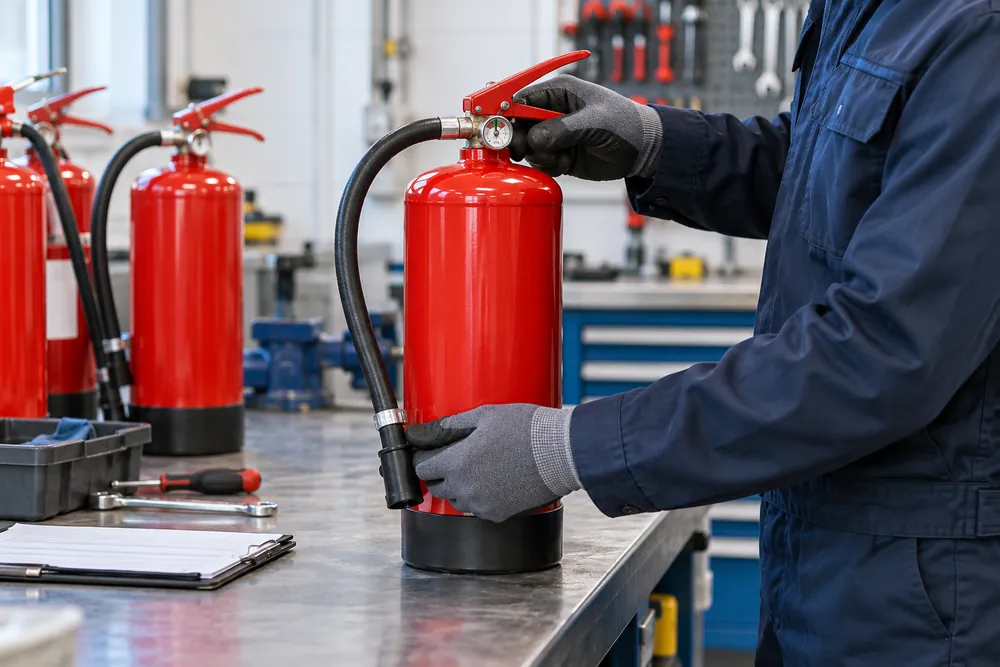
More Than A Label On The Cylinder
Portable extinguishers need to match the hazards they are provided for and remain accessible to trained users. A service examines the equipment itself, while a review of the location considers whether it still fits the premises. Changed processes, storage or room layouts can make an existing arrangement unsuitable.
Our enquiry process asks about the premises, the approximate equipment count and any known defects. A planned visit can cover straightforward servicing or identify a need for replacements and further assessment. The scope should separate routine maintenance from additional work so you can make an informed decision about recommendations.
When To Arrange Servicing
Arrange servicing when the scheduled maintenance is due, when taking responsibility for a building or where reliable records are missing. Equipment that has been used, damaged, tampered with or found to have lost pressure needs attention. Do not put a discharged unit back in position and assume it remains ready.
Between technical visits, nominated staff should check that units are present, accessible and free from obvious damage. Keep access clear when deliveries arrive or furniture moves. If an extinguisher is missing or unavailable, review the temporary provision through the person responsible for the building's fire safety.
The Relevant Standards And Duties
BS 5306-3:2017 is the code of practice for commissioning and maintenance of portable fire extinguishers. It covers basic servicing and other maintenance stages that depend on the extinguisher type and manufacturer. BSI describes annual inspection by a competent person as part of this maintenance approach (BSI, BS 5306-3 overview).
BS 5306-8 addresses selection and positioning of portable extinguishers. The fire risk assessment should inform the overall provision, alongside any particular process hazards. Article 17 of the Regulatory Reform (Fire Safety) Order 2005 addresses maintenance of fire precautions, so keep servicing records and act on defects rather than relying only on the date label.
What A Service Should Record
A service record should identify each unit, its location, condition and the maintenance completed. The technician should check the components relevant to that type, including the cylinder, operating mechanism, hose, seals and any pressure indication. Findings should explain why equipment has been condemned or requires further work.
Some maintenance stages require discharge testing, overhaul or replacement, depending on the unit and its history. A basic service does not mean every extinguisher should be discharged during the visit. Ask for the reason and standard or manufacturer requirement behind a replacement recommendation, especially when managing a larger equipment inventory.
Equipment Suited To Your Risks
Workshops, commercial kitchens, offices and plant rooms can present different fire hazards. Water-based, carbon dioxide, foam, powder and wet chemical extinguishers have different uses and limitations. Equipment selection should consider the actual materials and processes, plus the environment in which staff might need to use it.
Portable firefighting equipment should support an evacuation plan and suitable staff instruction. It is not a reason for untrained staff to approach a developing fire or delay leaving. Specialist hazards, including certain metal fires or unusual industrial processes, need competent advice rather than a generic extinguisher package.
Managing Replacements And Waste
Ask whether replacement equipment, commissioning, brackets and signage are included in the proposal. A replacement should be appropriate for the hazard and properly installed, not simply left beside the old unit. Retain an updated equipment list so future maintenance follows the actual inventory.
Old cylinders and extinguishing media require appropriate disposal. Discuss collection and handling with the service provider before agreeing replacement work, particularly for media with environmental concerns. Do not empty equipment into drains or leave unwanted cylinders in general waste, and keep any relevant disposal documentation with the job record.
What Affects Servicing Cost
The number and type of extinguishers, their maintenance stage, condition and spread across buildings affect the work. Secure areas, several site visits and restricted access can also change the quotation. Extended servicing, replacement equipment and disposal should be identifiable rather than hidden within an unclear overall figure.
Send the site postcode, building use, approximate unit count and date of the last service if known. If you have an equipment register, keep it available for the visiting technician. Ask for clear unit records, a list of defects and written approval before replacements outside the agreed servicing scope are supplied.